Creative Writing for the Chaotic Imagination
In every English class I was taught that every great story should have a clear beginning, middle, and end. There were no short-cuts to this: if I wanted my short stories to be successful, they had to be written in that exact order: beginning, middle, and end. Extra credit if the ending of the story was as satisfying as the story’s beginning.
It sounds so natural and simple.
Anyone can do it if they work hard enough.
But my ideas don’t appear in that order. Sometimes the final scene of the story appears in my head and the beginning and the middle don’t exist. Or I come up with so many scenes that feel like they belong in the huge middle territory of my story. But the scenes are such a jumbled mess that I can’t tell where one scene ends and another begins.
The most jarring are the flash-bang scenes that pop into my brain with no context and no connection to what I’m working on at the time. I write those scenes down on a scrap of paper before I lose them, but they are guaranteed to interrupt my workflow for a few minutes after being transcribed.
I’m no longer in school and I now have works published in anthologies but my inner critic is still stuck in a perpetual English class searching for the correct formula for writing stories that will come out perfect every time.
I have a pile of stories half-finished because I let my imagination get snagged on the learned tyranny of sequential order. I convince myself that I can’t start writing a short story draft until I know for sure which scene is the opening paragraph–the correct beginning that ensures short story success.
The fact that it is impossible for me to know ahead of time doesn’t bother my inner writing critic. It is the spawn that formed from the curriculum of well-intentioned English teachers. A curriculum that failed, by design or by accident, to understand that a gifted, neurodivergent brain that refuses to think in a straight line needs to be nurtured not shoved onto a one-size-fits-all racetrack.
Organized thoughts are easier to read and understand. I don’t want my thoughts to be total chaos, so I give myself permission to pour out my ideas onto the page in nonsequential order. Let them flow in their natural state and be etched onto the page in ink. After that, I can shuffle them in an acceptable order to make the story whole while maintaining its pulsating vitality.
To this day, I’m still learning how to un-learn twelve plus years of writing rules that puts the breaks on my brainstorming sessions. Maybe your imagination is chaotic like mine. Here are three tips that could help keep your creativity flowing and not stall out before you have a story to edit:
- Embrace a sticky-note scribbling habit. The pieces of paper scattered on every desk you write on are not signs of a scrambled mind or a failure to focus. They are ideas successfully captured that would otherwise fade into the dust of forgotten thoughts.
- Take a break when you find yourself frustrated or stuck. I often do something that isn’t writing: either a craft, such as knitting, or a cleaning chore. I can’t be trapped in my head if I’m focused on working with my hands.
- Remember that you can’t edit an unfinished piece and the scenes don’t have to be in order. They just have to be on paper (I still have arguments with myself about this fact).
My goal for the rest of my writing career is to follow new guidelines that will aid me in my unique form of storytelling. Those first three rules above are a good start. But I’ll have to keep tossing away all the “rules” that block the flow of my rough-draft creativity. That will help my half-finished stories become whole and ready to be read.
———–
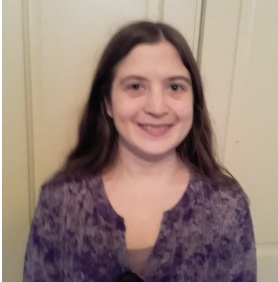
Melissa Raine lives in Frankfort, Kentucky and has been a member of Bluegrass Writer’s Coalition (BWC) for eight years. She has a personal essay published in volume one of From Pen to Page, a BWC anthology. Two of her poems were published in the second volume of the BWC anthology. Several short stories have been published in other literary magazines and contests. Melissa’s ongoing writing projects include speculative fiction and fantasy short stories.